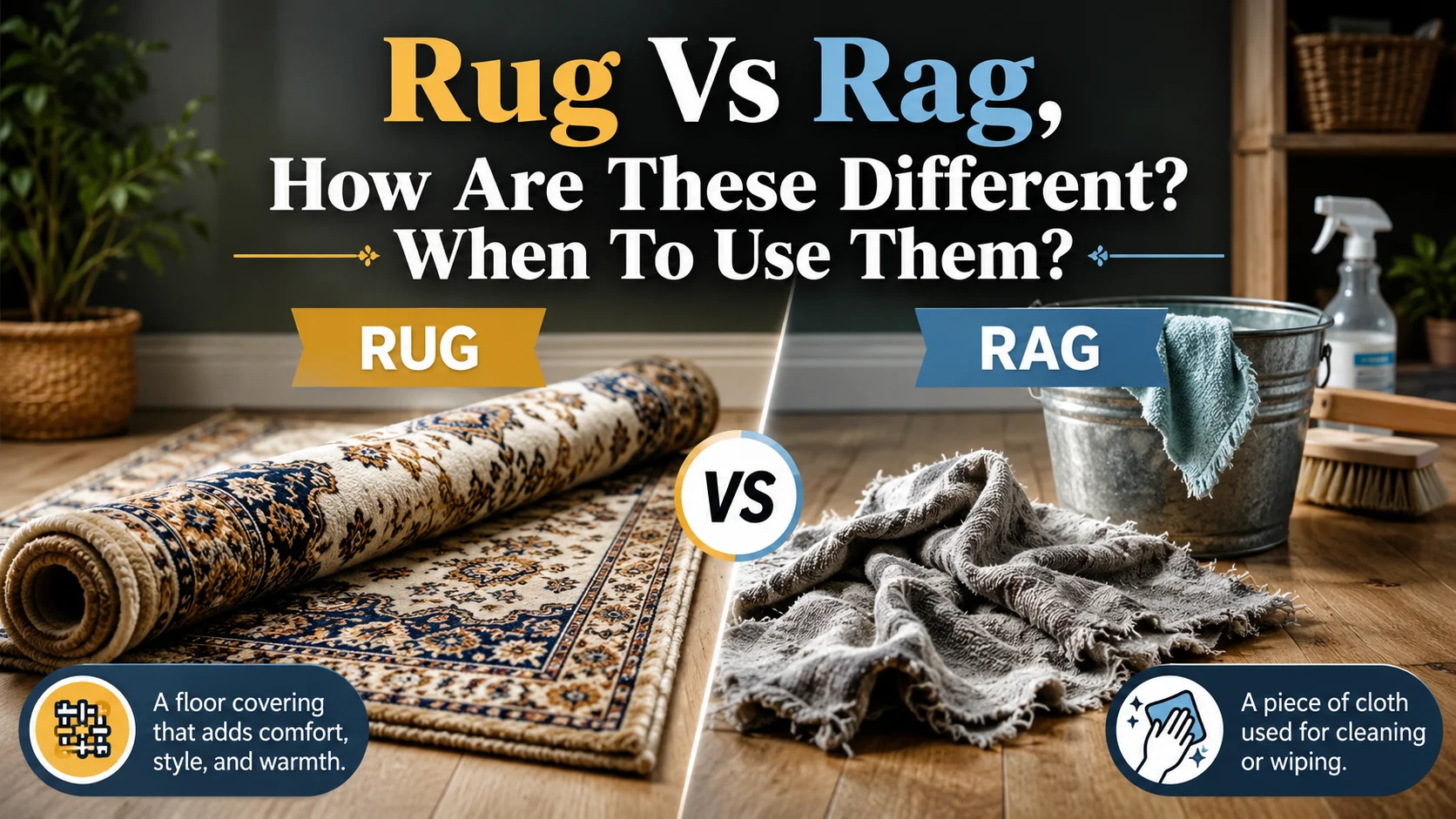
In everyday life, Many people stay confused about naming items like rug, rag, and rugs vs rags or rug vs rag, especially when choosing between thick piece of fabric used for decorative decorate to cover floor and floors, adding style to surfaces in the home. A rug is usually smaller than a carpet, often used to protect and improve decorating, while people also talk about rags vs rugs in daily life when Many try to pick the right one for their space. I’ve noticed this while helping people understand differences, where understanding meanings of similar terms helps avoid confusion in writing and conversation, and even makes you appreciate a bit of history behind these words.
A rag, on the other hand, is a worn, torn, or leftover cloth mainly used for cleaning, wipe, and handle spills in a practical piece rather than decoration. It comes in handy for cleaning, wipe, and clean tasks, especially when things get messy. Sometimes people might wonder about rugs or rags at the doorstep, but knowing the purpose of each makes life simpler. A rug brings decorating, style, and comfort, while a rag is for cleaning, and this simple difference helps you pick right one for a tidy and comfortable home, making writing, conversation, and understanding much easier in real situations.
Rug vs Rag Meaning: What Each Word Really Means
What a Rug Means in Everyday English
A rug is a thick piece of fabric placed on the floor. It can be decorative or functional, but its main job is to improve a space.
You’ll often see rugs in:
- Living rooms
- Bedrooms
- Hallways
- Prayer spaces
Rugs come in different materials like wool, cotton, silk, or synthetic fibers. Some are soft and fluffy. Others are flat and patterned.
Read more: Grately vs Greatly: When To Use Each One In Writing
In simple terms, a rug is about comfort and design.
Real example:
“She placed a Persian rug under the coffee table to warm up the room.”
According to dictionaries, a rug is a floor covering made for warmth or decoration
What a Rag Means in Everyday English
A rag is a piece of old cloth. It’s usually torn, worn, or recycled from something else like an old shirt or towel.
People use rags for:
- Cleaning spills
- Wiping dust
- Polishing surfaces
- Greasy garage work
A rag is not about beauty. It’s about usefulness.
Real example:
“He grabbed an old rag and cleaned the oil off the counter.”
A rag is typically defined as a worn or torn piece of cloth used for cleaning
Rug vs Rag: Key Differences That Make It Clear
Let’s make this super simple. The difference becomes obvious once you compare purpose, condition, and usage.
| Feature | Rug | Rag |
| Purpose | Decoration & comfort | Cleaning & wiping |
| Condition | New or well-made | Old or worn-out |
| Material | Wool, cotton, silk, synthetic | Recycled cloth |
| Placement | Floors, décor spaces | Cleaning tasks |
| Value | Stylish & intentional | Practical & disposable |
Here’s the easiest way to remember it:
- Rug = something you show off
- Rag = something you throw around while cleaning
Origin of the Words Rug and Rag
Words carry history, and these two are surprisingly old.
Origin of “Rug”
The word rug goes back to old Scandinavian and Middle English roots. It originally referred to a thick covering or tufted fabric. Over time, it evolved into what we now call floor coverings.
Historically, rugs were handmade and considered valuable household items. Even today, handcrafted rugs like Persian designs can cost thousands of dollars.
Origin of “Rag”
The word rag comes from old Norse and Middle English, meaning a torn piece of cloth.
It originally described fabric scraps. Later, it expanded to mean:
- Old clothes
- Worn-out fabric
- Cleaning cloths
So both words come from textile history. One became refined. The other stayed practical.
How People Use Rug and Rag in Real Life
Language becomes clearer when you see it in action.
Rug in daily speech
- “We bought a new rug for the bedroom.”
- “That rug really completes the room.”
- “The rug feels soft under my feet.”
Rag in daily speech
- “Pass me a rag to clean this mess.”
- “He used an old rag to wipe the table.”
- “Don’t throw it away. It can still be a rag.”
Notice the tone difference?
- Rug conversations feel design-focused
- Rag conversations feel task-focused
When to Use a Rug vs Rag (Simple Practical Guide)
This is where confusion disappears completely.
Use a rug when you want:
- To decorate your home
- To add warmth to a floor
- To improve interior design
- To define a space visually
Think of rugs as part of your home’s personality.
Use a rag when you want:
- To clean dirt or spills
- To wipe surfaces
- To handle messy work
- To reuse old fabric
Think of rags as your cleanup helpers.
Memory trick:
- Rug = Room Upgrade
- Rag = Remove Grime
Short. Simple. Effective.
More About Rugs: Types You’ll Actually See
Rugs aren’t just one thing. They come in different styles and purposes.
Common types of rugs:
- Area rugs – Cover large sections of floors
- Prayer rugs – Used for religious practice
- Decorative rugs – Focus on design and aesthetics
- Handwoven rugs – Often handmade and valuable
- Rag rugs – Made from fabric strips sewn together
Interestingly, a rag rug is a real thing. It’s a rug made from old fabric strips stitched together
So yes, the words can even connect—but they still mean different things.
Common Mistakes People Make With Rug vs Rag
Even fluent speakers slip up sometimes.
Common errors:
- Saying “wipe it with a rug” ❌
- Calling a floor mat a rag ❌
- Confusing pronunciation in fast speech ❌
Why it happens:
- The words sound similar
- They both relate to fabric
- Context isn’t always clear in speech
But once you remember purpose, the confusion fades.
Examples in Sentences (Clear Practice Section)
Let’s lock it in with real usage.
Rug examples:
- “She rolled out a soft rug in the hallway.”
- “The rug adds color to the living room.”
- “I spilled tea on the rug by mistake.”
Rag examples:
- “He used a rag to clean the engine.”
- “Keep a rag near the sink for spills.”
- “The old shirt became a cleaning rag.”
Say them a few times out loud. You’ll feel the difference.
Simple Memory Trick to Never Mix Them Again
Your brain loves patterns. So use this:
- Rug = Rich, decorative ground cover
- Rag = Rough, used cloth
Now imagine this:
A rug sits proudly in a living room like furniture.
A rag sits in a bucket, waiting for the next spill.
That mental picture sticks fast.
Why This Difference Actually Matters
At first, this may seem like a tiny grammar detail. But it matters more than you think.
Using the wrong word can:
- Change meaning completely
- Make speech confusing
- Create funny misunderstandings
Imagine telling someone:
“I bought a beautiful rag for my living room.”
People might pause and look confused.
Clear language builds clear communication. And clarity always wins.
Quick Comparison Recap
- Rug = decorative floor item
- Rag = cleaning cloth
- Rug improves space
- Rag handles mess
- Rug is bought
- Rag is usually repurposed
Simple. Clean. Unforgettable.
Conclusion
Understanding Rug Vs Rag, How Are These Different? When To Use Them? makes everyday choices much easier in the home. A rug is meant for decoration, comfort, and covering floors, while a rag is purely for cleaning and handling mess. Once you clearly see this difference, you avoid confusion in both writing and daily conversation. It also helps you pick the right item quickly without mixing their purposes.
FAQs
1. What is the main difference between a rug and a rag?
A rug is decorative and used on floors, while a rag is a worn cloth used for cleaning.
2. Can a rag be used like a rug?
No, a rag is not designed for decoration or floor covering like a rug.
3. Why do people confuse rug and rag?
They sound similar and both are made from fabric, which often leads to confusion.
4. Where is a rug usually used?
A rug is commonly used in homes to cover floors and improve interior style.
5. What is the main use of a rag?
A rag is mainly used for wiping, cleaning, and handling spills.