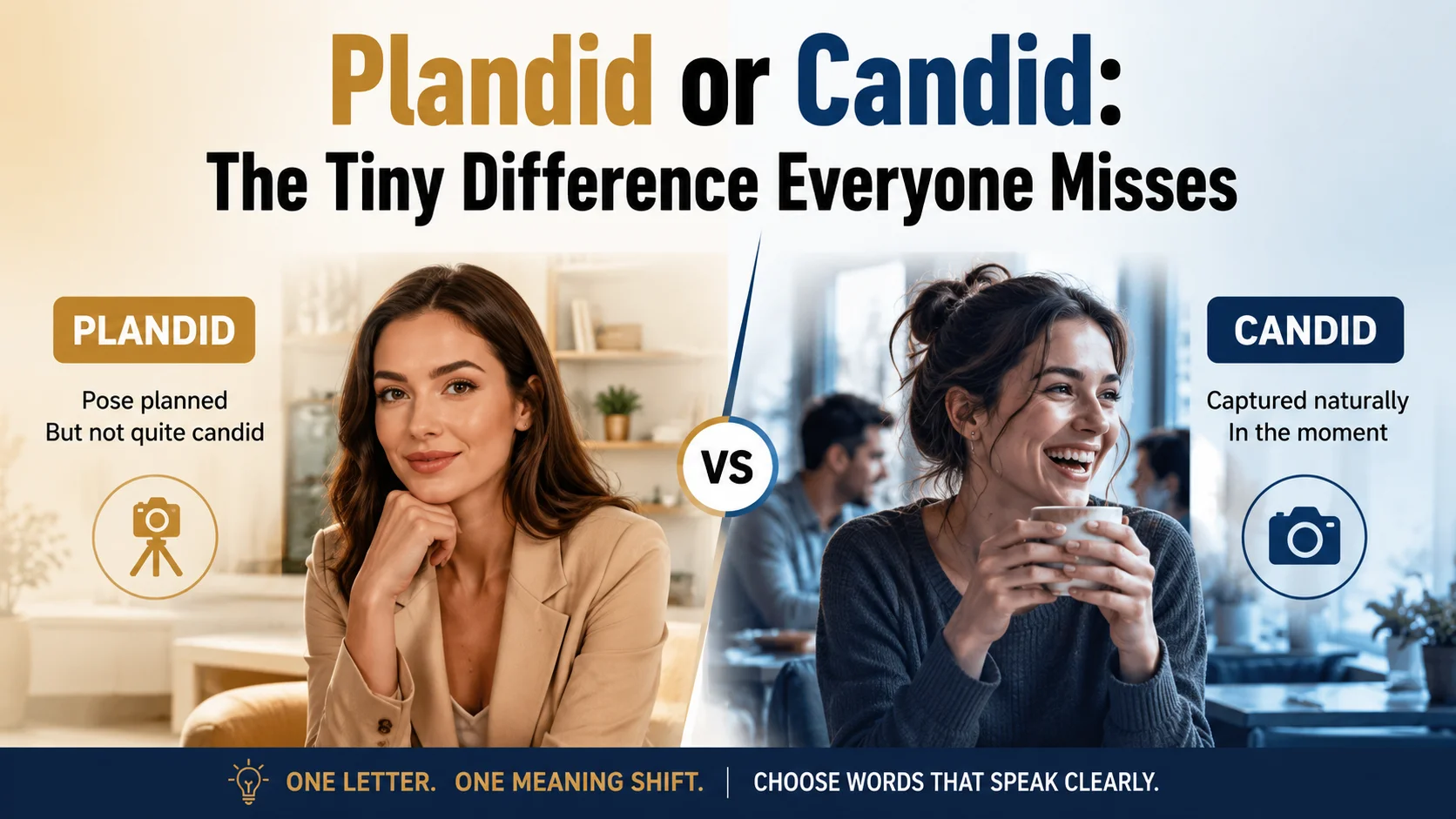
In simple terms, candid means natural, honest, and posed without control, while plandid is a slang idea often used informally in social media to describe a planned appearance that still looks natural. A simple rule helps explain this: always use candid in formal writing and professional writing because it is correct, standard, and clear, while plandid is not suitable for interview use.
People searching online often want a word that keeps confusion open, but it also gives a guide to intent, using, and sometimes informal expression. It has better understanding in English words and shows how meaning and usage in writing can shape how people interpret appearance, relaxed tone, and ideas in real communication.
What Does Candid Mean in Plandid vs Candid Photography?
The word “candid” describes something honest, natural, and unposed. In photography, it means capturing a moment without interference.
A candid shot happens when life is allowed to move without direction.
Read more: Striping vs Stripping: Meaning,and Grammar Differences
Core Meaning of Candid
A candid photo is:
- Unplanned
- Unposed
- Unstaged
- Emotionally real
The subject often does not know the exact moment the photo is taken, or they ignore the camera completely.
Key Traits of Candid Photography
Candid images usually share these qualities:
- Natural facial expressions
- No forced body posture
- Real interactions between people
- Imperfect framing (which makes it feel alive)
- Spontaneous timing
These imperfections are what make candid photography powerful. It feels human.
3 Real Examples of Candid Moments
To fully understand candid in the plandid vs candid comparison, look at real-life situations:
- A bride laughing during a wedding speech without noticing the camera
- Friends reacting naturally during a surprise celebration
- A child running into the frame while playing outdoors
None of these moments are staged. They simply happen.
Where Candid Photography Is Used
Candid photography appears in:
- Journalism and documentary work
- Wedding photography
- Street photography
- Family storytelling
- Social media “real life” posts
A famous photography quote captures it well:
“The best pictures happen when no one is trying to pose for them.”
That idea sits at the heart of candid photography.
What Does Plandid Mean in Plandid vs Candid Culture?
The word “plandid” is modern slang. It blends:
- Planned
- Candid
It describes a photo that looks spontaneous but is actually carefully arranged.
Core Meaning of Plandid
A plandid photo is:
- Deliberately planned
- Carefully staged
- Designed to appear natural
- Often retaken multiple times
Even though it looks effortless, it usually takes effort.
Key Traits of Plandid Photography
A plandid image often includes:
- Pre-selected location
- Controlled lighting or time of day
- Directed poses that feel “casual”
- Multiple retakes for perfection
- Intentional styling
In simple terms, plandid means “fake casual done well.”
3 Real Examples of Plandid Moments
To understand plandid in the plandid vs candid difference:
- An influencer sitting on a café chair pretending not to pose while camera angles are carefully adjusted
- A couple laughing repeatedly until the “natural laugh” is captured
- A travel photo where walking is staged multiple times for the perfect motion shot
The moment looks natural, but it is engineered.
Where Plandid Photography Is Used
Plandid content dominates:
- Instagram influencer posts
- Lifestyle branding campaigns
- Fashion shoots
- Travel content creation
- Social media advertisements
One industry photographer put it simply:
“Nothing is accidental in a plandid shot. It just hides the effort well.”
Plandid vs Candid: The Core Difference Explained Clearly
Now let’s break down the real heart of plandid vs candid.
This is where most people misunderstand the concept.
Intent vs Spontaneity
- Candid = no planning, pure spontaneity
- Plandid = high planning, designed spontaneity
Awareness Factor
- Candid = subject is unaware or ignores camera
- Plandid = subject is fully aware and directed
Control Level
- Candid = zero control over timing or expression
- Plandid = full control over framing, posture, and setting
Emotional Truth vs Visual Perfection
- Candid focuses on real emotion
- Plandid focuses on aesthetic perfection
That difference shapes everything from photography style to social media culture.
Plandid vs Candid Comparison Table
| Feature | Candid | Plandid |
| Planning | None | High planning |
| Awareness | Low or none | High awareness |
| Pose | Natural | Directed |
| Editing control | Minimal | Often refined |
| Goal | Capture reality | Create illusion of reality |
| Common use | Journalism, events | Social media, branding |
Why People Confuse Plandid vs Candid So Easily
The confusion is not random. It comes from how modern photography works.
1. Social Media Filters Reality
Instagram and TikTok often blur the line between real and staged content. A plandid shot can look identical to a candid one.
2. Natural-Looking Poses Are Engineered
People practice “natural” expressions. That creates visual overlap.
3. Captions Mislead Context
Many users label staged photos as “candid moments” for engagement.
4. Lighting and Editing Hide Effort
Even candid photos are often lightly edited, which adds confusion.
Common Mistakes in Plandid vs Candid Usage
Understanding mistakes helps lock in the difference.
Mistake 1: Calling any good photo “candid”
Just because a photo looks natural doesn’t mean it is candid.
Fix: Ask yourself if the subject was directed.
Mistake 2: Thinking plandid means fake or bad
Plandid is not negative. It’s just intentional.
Fix: Understand it as controlled creativity
Mistake 3: Using both terms interchangeably
Many captions mix them incorrectly.
Fix: Match word with actual process, not appearance.
When to Use Candid in Real Situations
Use candid when the moment is truly unplanned.
You should use “candid” when:
- The subject is unaware of the camera
- No posing instructions were given
- Emotion happens naturally
- Timing is unpredictable
Example sentences:
- “I caught a candid moment of my friends laughing at dinner.”
- “The photographer specializes in candid wedding shots.”
Candid photography works best when honesty matters more than perfection.
When to Use Plandid in Real Situations
Use plandid when planning shapes the image.
You should use “plandid” when:
- The scene is arranged intentionally
- The subject is aware of posing
- The goal is to look effortless but aesthetic
- Multiple takes are involved
Example sentences:
- “Her Instagram feed is full of plandid travel shots.”
- “That café picture is clearly plandid, but it looks natural.”
Plandid content thrives in curated visual storytelling.
Memory Hack to Never Confuse Plandid vs Candid
Here’s a simple mental shortcut:
- Candid = “Can’t control it”
- Plandid = “Planned but looks candid”
If control exists, it’s plandid. If control disappears, it’s candid.
How Plandid vs Candid Works in Social Media Culture
Photography is not just art anymore. It’s communication.
Candid in Social Media
- Builds trust
- Shows authenticity
- Creates emotional connection
- Often used in storytelling posts
Plandid in Social Media
- Builds aesthetic identity
- Improves brand consistency
- Drives engagement through visual appeal
- Used heavily by influencers
A marketing study from social media analysts shows:
- Posts perceived as “authentic” get up to 35% more engagement
- Highly curated “plandid” posts still dominate brand campaigns due to visual control
So both have value, just different goals.
Word Origin Insight in Plandid vs Candid
Understanding language helps deepen clarity.
Candid Origin
The word comes from Latin candidus, meaning:
- Pure
- White
- Honest
Over time, it evolved into “truthful expression without disguise.”
Plandid Origin
A modern internet blend:
- “Planned” + “candid”
- First popularized in influencer culture and lifestyle blogging
It is not formal English. It is digital slang.
Formal vs Informal Usage of Plandid vs Candid
Candid
- Accepted in journalism
- Used in academic writing
- Common in professional photography
Plandid
- Informal only
- Used in social media captions
- Not used in formal writing or research papers
If you’re writing professionally, stick to candid.
Mini Case Studies: Real-World Plandid vs Candid Examples
Case Study 1: Wedding Photography
A wedding shoot often mixes both styles.
- Candid: groom laughing during vows
- Plandid: couple posing in sunset lighting
Both serve different storytelling goals.
Case Study 2: Influencer Content Creation
An influencer posts “morning coffee vibes.”
Behind the scenes:
- Table is arranged
- Lighting is adjusted
- Camera angle is tested repeatedly
That’s plandid, not candid.
Case Study 3: Street Photography Ethics
A street photographer captures real city life.
- No posing
- No awareness
- No staging
That is pure candid photography.
Quick Recap of Plandid vs Candid
- Candid = natural, unplanned, real moments
- Plandid = planned, styled, natural-looking illusion
- Difference = control vs no control
Mini Quiz: Test Your Understanding
Try these quickly:
- A friend laughs naturally during a party photo. What is it?
- An influencer poses casually after 10 retakes. What is it?
- A child playing unaware of a camera. What is it?
- A styled café shoot designed to look spontaneous. What is it?
- A documentary photographer capturing street life. What is it?
Conclusion
The difference between candid and plandid is small but important in modern digital communication. Candid is the correct English word that means natural, honest, and unposed, while plandid is an informal internet slang term used to describe photos that are planned but made to look natural. In everyday writing, social media captions, and professional use, choosing candid keeps your language clear, standard, and correct. Understanding this difference helps you communicate better and avoid confusion in both online and offline contexts.
FAQs
1. What does candid mean?
Candid means natural, honest, and not posed or staged. It usually refers to real and unplanned moments.
2. Is plandid a real English word?
No, plandid is not a standard English word. It is slang used on social media.
3. When should I use candid?
You should use candid in formal writing, captions, interviews, and professional communication.
4. Why do people use the word plandid?
People use plandid online to describe photos that are carefully planned but look natural.
5. Can plandid be used in professional writing?
No, plandid is not suitable for professional or academic writing. It is informal internet slang.