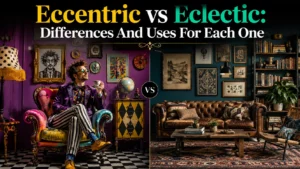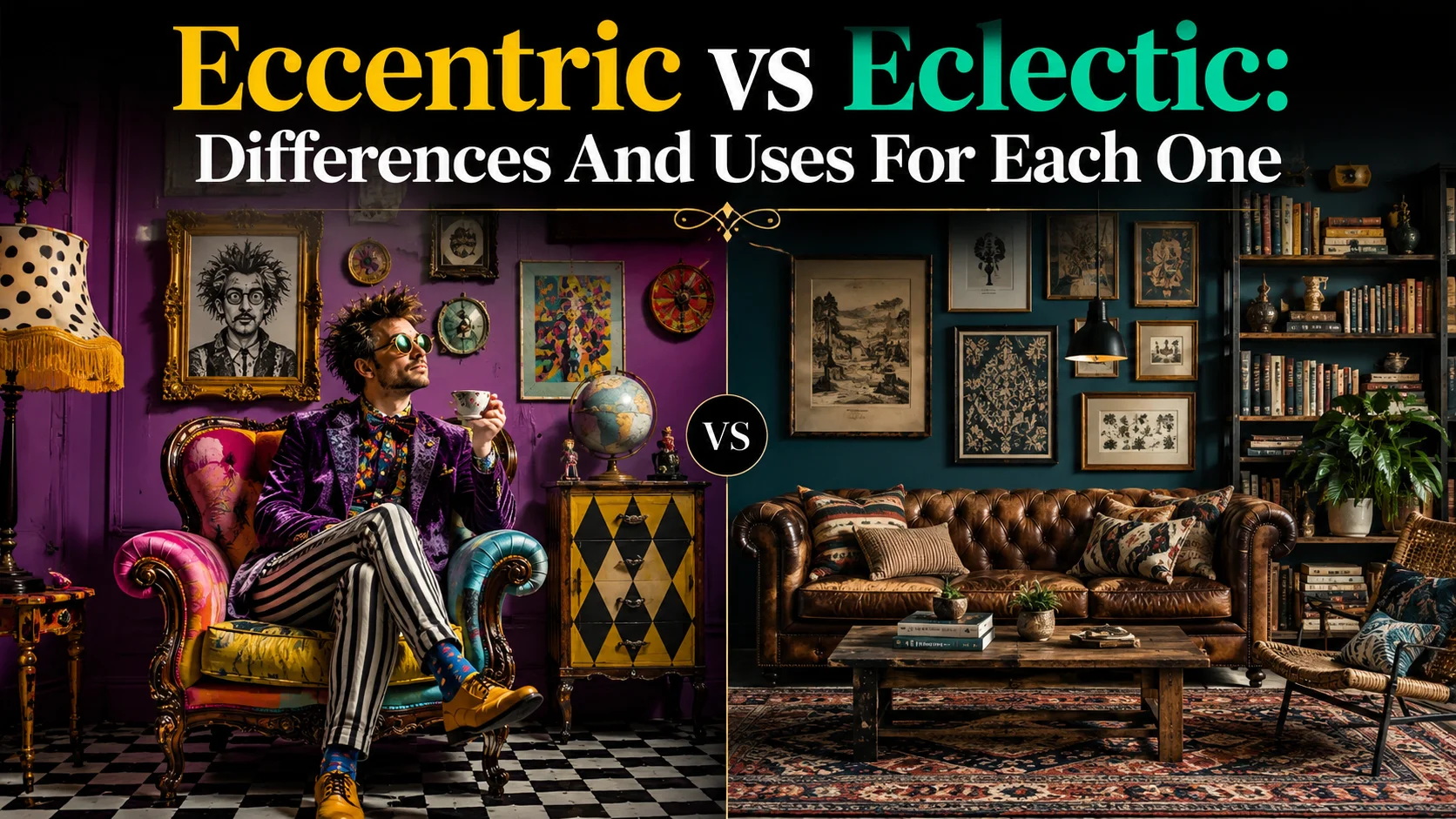
Eccentric vs Eclectic: Differences And Uses For Each One shows how eccentric and eclectic differ in meaning, usage, and context.
An eccentric person often has an unconventional personality quirky personality quirky behavior odd behavior people behavior and unique habits that make them stand out from the ordinary. An eclectic person likes mixed styles style fashion fashion style interior design art visual arts painting drawing filmmaking sculpture photography video crafts and architecture so their taste may show diversity variety curated collections wardrobe appearance personal preference preferences interests and creative expression. Writers can use these words to describe people describe behavior, and describe style in a clear and proper way.
Many people think the two words mean the same thing or can be used interchangeably, but that assumption creates confusion. The better choice depends on context and language: eccentric usually implies something unusual outside the norm or a clear departure from convention while eclectic means mixing many ideas interests styles and collections into one distinctive expression. Getting the correct spelling definitions and interpretation helps you avoid mistakes and misuse, and it improves word choice, vocabulary communication clear communication, accurate communication, expressive language and precise language in writing speech blogs conversations, and everyday life in 2026.
Eccentric vs Eclectic at a Glance
Before we go deeper, here is a quick side-by-side view.
| Feature | Eccentric | Eclectic |
| Core meaning | Strange, unconventional, odd in a noticeable way | Chosen from many sources, styles, or ideas |
| Main focus | A person, behavior, or trait | A mix, collection, style, or taste |
| Common tone | Can be neutral, humorous, affectionate, or critical | Usually positive, creative, and open-minded |
| Typical use | Eccentric man, eccentric habits, eccentric ideas | Eclectic taste, eclectic style, eclectic mix |
| What it suggests | Someone or something does not follow the usual pattern | Someone or something brings together different elements |
| Opposite idea | Conventional, ordinary, mainstream | Uniform, narrow, single-source |
| Best memory cue | Think “off-center” | Think “picked from many places” |
A simple way to remember the difference:
- Eccentric = unusual in personality or behavior.
- Eclectic = varied in source, style, or taste.
That single distinction solves most confusion.
What Does Eccentric Mean?
Eccentric describes something or someone that does not behave in the usual way. The person, habit, idea, or style may seem unusual, quirky, or even a little strange.
The word comes from Greek roots meaning “out of the center.” That image works well. An eccentric thing is not centered on the norm. It sits a little outside the circle.
In everyday English, eccentric often refers to people.
Read more: Incall or Outcall: Which One Should You Use?
Common uses of eccentric
- An eccentric neighbor who talks to birds
- An eccentric inventor with strange routines
- An eccentric millionaire who wears mismatched suits
- An eccentric style that breaks ordinary fashion rules
- An eccentric habit like collecting teacups by color
Tone of eccentric
This word can carry different shades of meaning depending on context.
It can sound:
- Neutral: “He has eccentric habits.”
- Affectionate: “She is eccentric, but everyone likes her.”
- Critical: “That was an eccentric decision.”
So, eccentric is not always negative. Still, it usually signals that something is a bit unusual or hard to categorize.
Eccentric in real life
You might use this word when someone:
- dresses in a way that does not follow trends
- keeps unusual routines
- has odd but harmless interests
- says things in a surprising way
- behaves outside social expectations
An eccentric person is not necessarily wrong. They are simply not typical. That distinction matters. Eccentricity can be annoying, charming, creative, or all three at once.
What Does Eclectic Mean?
Eclectic describes something formed by choosing from many different sources, styles, or ideas.
The word comes from Greek roots meaning “to select” or “to pick out.” That makes sense too. An eclectic style is not random chaos. It is a thoughtful mix.
An eclectic room may combine vintage chairs, modern lamps, bold art, and handmade textiles. An eclectic playlist may move from jazz to hip-hop to classical piano. An eclectic reader might enjoy philosophy, romance, history, and science fiction all in the same month.
Common uses of eclectic
- Eclectic taste in music
- Eclectic style in fashion
- Eclectic decor in a living room
- Eclectic influences in art
- Eclectic collection of books or objects
Tone of eclectic
This word usually sounds positive. It suggests variety, range, and curiosity. It often implies that someone has broad interests or that a mix of styles works well together.
However, it can also suggest a lack of focus if used carelessly.
For example:
- “Her taste is eclectic” sounds flattering.
- “The article feels eclectic” could mean the piece jumps around too much.
So, even though eclectic often sounds good, context still controls the meaning.
Eccentric vs Eclectic: The Main Differences
Here is the clearest way to separate them.
| Aspect | Eccentric | Eclectic |
| Main idea | Unusual behavior or character | A mix from different sources |
| Describes | Person, action, habit, idea | Style, taste, collection, design |
| Social meaning | Odd, unconventional, quirky | Diverse, varied, mixed thoughtfully |
| Tone | Can be playful or critical | Usually positive and creative |
| Common mistake | Using it when you mean varied | Using it when you mean strange |
The easiest mental test
Ask yourself this:
- Are you describing something odd or unconventional? Use eccentric.
- Are you describing something made from different things? Use eclectic.
That question works almost every time.
Example comparison
- Eccentric: “My uncle has eccentric routines. He eats breakfast at 4 a.m. and talks to his plants.”
- Eclectic: “My uncle has eclectic taste. His home mixes antique furniture, modern art, and folk music.”
Notice the difference. The first sentence describes behavior. The second describes variety.
Is Eccentric Always Negative?
No. In fact, eccentric can sound surprisingly warm or even admirable.
A person with eccentric habits may be seen as:
- creative
- independent
- imaginative
- fearless
- original
Think of the classic image of a brilliant scientist, artist, or inventor who never quite fits in. People often call that person eccentric, and the word can feel affectionate rather than insulting.
When eccentric sounds positive
- “She is eccentric in the best possible way.”
- “His eccentric ideas helped the team think differently.”
- “The old professor had an eccentric charm.”
When eccentric sounds negative
- “His eccentric behavior made meetings awkward.”
- “That was an eccentric choice for a formal event.”
- “Her eccentric decisions caused confusion.”
So, the word itself is flexible. The tone depends on the writer, speaker, and situation.
Is Eclectic Always Positive?
Not always, though it usually is.
Eclectic often suggests good taste, wide interests, and creative blending. People use it to praise interior design, fashion, music, reading habits, and art collections.
But eclectic can also imply too much variety if the mix feels messy or unfocused.
When eclectic sounds positive
- “She has an eclectic wardrobe.”
- “The restaurant’s eclectic menu attracts curious diners.”
- “Their home has an eclectic mix of old and new pieces.”
When eclectic can sound less positive
- “The presentation felt eclectic, but not very organized.”
- “The book takes an eclectic approach, which may confuse some readers.”
In other words, eclectic is often a compliment, but not a guaranteed one. If the mix feels deliberate, the word works well. If the mix feels random, the word may sound awkward or mildly critical.
Can Someone Be Both Eccentric and Eclectic?
Yes. In fact, many people are both.
A person can have eccentric habits and eclectic taste at the same time.
Example
Imagine a woman who:
- wears bright, mismatched clothes
- keeps a pet parrot
- collects old vinyl records
- loves Japanese literature, jazz, and vintage furniture
She may be called eccentric because of her unusual behavior. She may also be called eclectic because of her broad, mixed taste.
That overlap is real. The words are not enemies. They just describe different things.
- Eccentric points to the person’s manner or conduct.
- Eclectic points to the person’s preferences or collection.
That distinction keeps your writing precise.
Grammar Rules for Eccentric and Eclectic
Both words are adjectives in common use.
Eccentric as an adjective
Use it before a noun or after linking verbs.
- eccentric man
- eccentric behavior
- eccentric
- “The teacher is eccentric.”
Eclectic as an adjective
Use it before a noun or after linking verbs.
- eclectic taste
- eclectic collection
- eclectic
- “Her style is eclectic.”
They are not usually nouns
You do not normally say:
- “He is an eccentric” when speaking casually, though the noun form can exist in literary or formal usage.
More often, writers use the adjective form:
- “He is eccentric.”
Useful pattern examples
| Word | Natural pattern | Example |
| Eccentric | eccentric + person/behavior/style | eccentric uncle |
| Eclectic | eclectic + taste/style/mix/collection | eclectic music taste |
Common Collocations
Collocations are words that naturally go together. Learning them makes your writing sound smooth and native-like.
Eccentric collocations
| Collocation | Example |
| eccentric behavior | His eccentric behavior amused the room. |
| eccentric personality | She has an eccentric personality. |
| eccentric habits | The writer had eccentric habits. |
| eccentric genius | The film portrays him as an eccentric genius. |
| eccentric inventor | The eccentric inventor worked all night. |
| eccentric millionaire | The eccentric millionaire owned a castle. |
Eclectic collocations
| Collocation | Example |
| eclectic taste | He has eclectic taste in music. |
| eclectic style | Her eclectic style stands out. |
| eclectic mix | The album offers an eclectic mix of sounds. |
| eclectic collection | The museum has an eclectic collection. |
| eclectic decor | Their apartment has eclectic decor. |
| eclectic influences | The band draws on eclectic influences. |
These pairings matter because they help you choose the word that sounds natural, not just technically correct.
Eccentric vs Eclectic in Different Contexts
The right word often depends on the setting.
Everyday conversation
People often use eccentric for a person who acts differently from the crowd.
- “My neighbor is eccentric, but harmless.”
They use eclectic for variety in taste.
- “Her playlist is eclectic. It has everything from opera to rap.”
Interior design
- Eccentric: a room with unusual, surprising, maybe even odd choices
- Eclectic: a room that mixes styles in a deliberate way
Example:
- “The room looked eclectic, not chaotic.”
- “The room looked eccentric because of the neon chandelier and upside-down chairs.”
Fashion
- Eccentric: bold, unusual clothing choices that stand out
- Eclectic: a wardrobe that blends different styles well
Example:
- “His eccentric outfits always turn heads.”
- “Her wardrobe is eclectic, mixing retro and minimalist pieces.”
Music
- Eccentric: a performer with unusual stage behavior or odd artistic choices
- Eclectic: a playlist or album drawing from many genres
Literature and writing
- Eccentric: a strange character
- Eclectic: a reading list or authorial style influenced by many traditions
Business and academic writing
In formal writing, eclectic often appears in phrases like:
- eclectic approach
- eclectic methodology
- eclectic framework
Eccentric is less common in this setting unless you are describing a person, an attitude, or an unusual case.
Real-Life Examples That Make the Difference Obvious
Case study: The eccentric artist
A painter wears a purple hat every day, keeps midnight hours, and stores brushes in teacups. People call her eccentric because her behavior is unusual.
Her studio, however, may be eclectic if it contains antique easels, digital screens, African masks, and Japanese ink paintings.
Same person. Two different words. Each one fits a different layer of description.
Case study: The eclectic home
A home contains a velvet sofa, a rustic wooden table, abstract wall art, and a Moroccan rug. That home is eclectic because it brings together different styles.
If the owner also insists on greeting guests in rhyme and serving tea in a top hat, people may call the owner eccentric too.
Case study: The eccentric professor
A professor arrives in mismatched socks, speaks with dramatic pauses, and carries three notebooks filled with sketches. Students call him eccentric.
But if his lectures include history, physics, poetry, and music theory, you might also say his teaching has an eclectic range.
Again, the words can overlap, but they do not replace each other.
Examples in Sentences
Here are practical examples that show how each word works.
Eccentric in sentences
- She had an eccentric laugh that filled the room.
- His eccentric habits made him memorable.
- The film centers on an eccentric inventor.
- I found her eccentric, but I liked her immediately.
- Their eccentric design choice surprised everyone.
- He wore an eccentric coat with bright green buttons.
- The old poet lived an eccentric life on the coast.
- That was an eccentric way to solve a simple problem.
- The town’s eccentric mayor became a local legend.
- Her eccentric manner made the interview unforgettable.
Eclectic in sentences
- She has eclectic taste in music.
- The gallery displayed an eclectic mix of artists.
- Their house has an eclectic charm.
- He built an eclectic wardrobe over many years.
- The festival featured an eclectic lineup.
- Her reading list is eclectic and impressive.
- The menu offers an eclectic range of dishes.
- The band’s sound is eclectic, blending rock and folk.
- The class discussed an eclectic set of sources.
- The store sells eclectic home decor.
Common Mistakes Writers Make
Even experienced writers mix these two up. The errors usually happen for one of three reasons: the words look similar, both can refer to something unusual, and neither one appears in everyday speech as often as more common words like “weird” or “mixed.”
Mistake: using eccentric when you mean eclectic
Wrong:
- “She has eccentric taste in music.”
Better:
- “She has eclectic taste in music.”
Why? Because taste is about variety, not odd behavior.
Mistake: using eclectic when you mean eccentric
Wrong:
- “He has eclectic habits.”
Better:
- “He has eccentric habits.”
Why? Habits describe behavior, not a blend of sources.
Mistake: treating them as direct synonyms
They are related only in the broadest sense. Both can imply difference from the norm. But one describes oddness. The other describes diversity.
Mistake: using eclectic for anything random
Eclectic does not mean messy or careless. It suggests a selection from different sources, often with some thought behind it.
If the result looks sloppy, eclectic may not be the best word.
Similar Words and How They Compare
Sometimes another word fits even better. That is where precision helps.
| Word Pair | Key Difference |
| eccentric vs quirky | Quirky is lighter, friendlier, and less intense |
| eccentric vs odd | Odd is more general and less specific |
| eccentric vs unconventional | Unconventional focuses on breaking norms, not necessarily strangeness |
| eclectic vs diverse | Diverse is broader and more neutral |
| eclectic vs varied | Varied is simpler and less stylish |
| eclectic vs mixed | Mixed is more basic and less refined |
| eclectic vs versatile | Versatile means adaptable, not varied in source |
| eclectic vs multidisciplinary | Multidisciplinary applies mainly to fields, work, or study |
A few quick distinctions
- Quirky often feels more playful than eccentric.
- Odd is broad and can sound blunt.
- Unconventional sounds more formal and less judgmental.
- Diverse works well when you simply mean “many different kinds.”
- Varied is straightforward and plain.
- Multidisciplinary works for academic or professional contexts.
That means your exact word choice should match your tone.
How to Choose the Right Word Every Time
Use this simple decision guide.
| Ask yourself | If yes, use |
| Am I describing unusual behavior or personality? | eccentric |
| Am I describing a mix of styles, sources, or tastes? | eclectic |
| Does the sentence focus on the person’s oddness? | eccentric |
| Does the sentence focus on variety or selection? | eclectic |
| Do I mean “strange”? | eccentric |
| Do I mean “broad and mixed”? | eclectic |
Fast rule
- Eccentric = strange, unusual, off-center
- Eclectic = mixed, varied, drawn from different places
That rule is simple enough to remember and strong enough to use.
Memory Tricks to Never Confuse Them Again
A good mnemonic can save time.
Trick for eccentric
Think of eccentric as extra-center or off-center.
That makes it easy to remember that eccentric people or actions sit outside the usual center of behavior.
Trick for eclectic
Think of eclectic as elected from many.
You are choosing bits and pieces from different sources.
One-line memory summary
- Eccentric is about being different in a strange or unusual way.
- Eclectic is about combining different things in a thoughtful way.
Mini Practice Quiz
Try these before you move on.
Choose the better word in each sentence:
- Her taste in books is very ecentric / eclectic.
- The professor’s eccentric / eclectic habits made him unforgettable.
- The restaurant has an eccentric / eclectic menu with dishes from several cultures.
- He is known for his eccentric / eclectic sense of humor.
- The apartment has an eccentric / eclectic mix of furniture styles.
Answers
- eclectic
- eccentric
- eclectic
- eccentric
- eclectic
If you got all five right, you understand the difference well.
Quick Cheat Sheet
| Use this word | When you mean | Example |
| eccentric | strange, unusual, unconventional behavior or personality | eccentric neighbor |
| eclectic | a mix chosen from different sources or styles | eclectic taste |
Conclusion
Understanding the difference between eccentric and eclectic helps you choose the right word with confidence. While eccentric describes someone or something that is unusual or outside the norm, eclectic refers to a thoughtful mix of different styles, ideas, or influences. Knowing these meanings improves your writing, speech, and everyday communication. When you use each term in the correct context, your message becomes clearer, more accurate, and easier for others to understand.
FAQs
1. What is the main difference between eccentric and eclectic?
Eccentric describes unusual behavior, personality, or habits that stand out from the ordinary. Eclectic describes a combination of different styles, tastes, ideas, or influences that work well together.
2. Can eccentric and eclectic be used interchangeably?
No. Although the words are sometimes confused, they have different meanings. Eccentric focuses on being unconventional, while eclectic focuses on mixing elements from different sources.
3. Is an eclectic person also eccentric?
Not always. An eclectic person may enjoy a wide variety of interests or styles without having an eccentric personality. The two words describe different qualities.
4. How can I remember the difference between eccentric and eclectic?
Think of eccentric as describing someone who is unusual or quirky. Think of eclectic as describing a carefully selected mix of different styles, ideas, or tastes.
5. When should I use eccentric and when should I use eclectic?
Use eccentric when talking about unusual people, behavior, or habits. Use eclectic when describing mixed styles, collections, artistic influences, design, fashion, music, or other combinations from different sources.